WHY AN EXTENDED VALIDATION (EV) CERTIFICATE IS MOST RECOMMENDED?
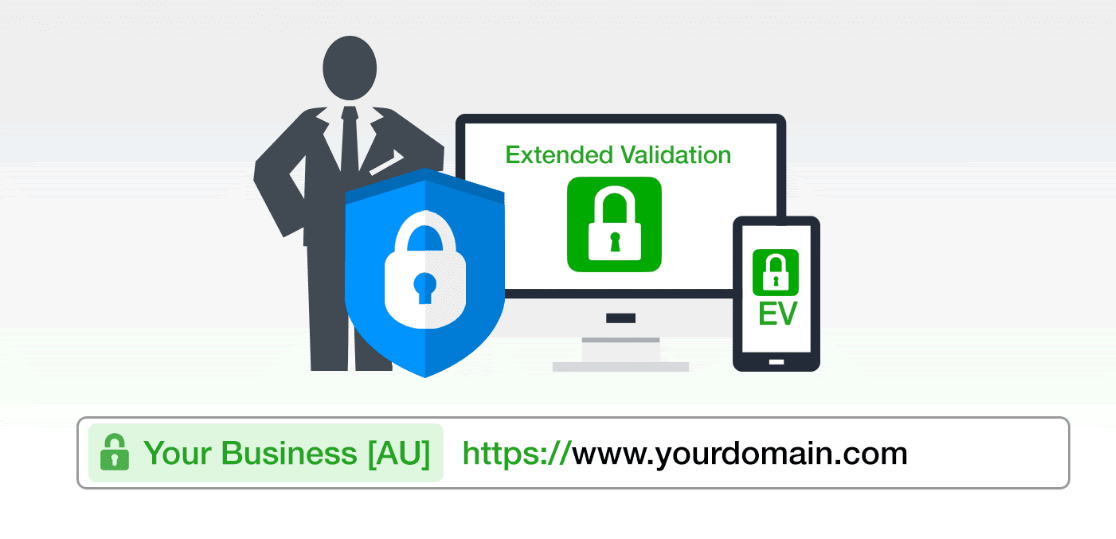
Extended validation certificates are those which conform to X.509 (this is a standard included in cryptography that defines the format of public key certificates) that include the owner’s legal entity and are signed by a certificate authority key that can issue EV certificates.
EV certificates can also be used just like all other X.509 certificates that include securing web communications with HTTPS and signing documents and software. Extended Validation certificates can be issued only by a subset of certificate authorities that require verification of the requesting entity’s legal identity before certificate issuance making them so different from the organization validation certificates and the domain validation certificates.
Extended validation certificates under some factors help gain customer’s trust building the company’s brand. The factors are discussed below.
For enterprises.

Unlike the organization validated certificates and the domain validated certificates the extended validated certificates require through longer verification efforts. Though lengthy the whole process is worthwhile in that it helps gain legitimacy and gain customer trust.Organisations which value customer trust and security greatly understand value received from the extended validated certificates since they take a step further greater than other SSL certificates in promoting the security of the customer’s information.
There are visual cues that only exist in the extended validated certificates secured sites that assure the customer that the organization highly values security for their information reassuring the customer to trust the organization in that their information is free from malicious activity. The visual cues include:
· The visible name text that is next to the location bar in the browser.
· The green address bar.
· The padlock in the address bar.
Greater Assurance.
Extended validated certificates give a greater assurance than the domain validated certificates in that the domain validated certificates do not possess any identifying information in the organizational name field most definitely causing the end-user to not trust the certificate to confirm who is on the other end while they technically support transaction encryption.
Extended validated certificates, however, obligate the certificate authority to validate the physical appearance, legal entity and the operational existence before issuing a certificate. The process involved in that involves the following steps:
· Verifying whether the requestor has legal right to use the domain.
· Affirming whether the requestor has properly authorized the issuance of the certificate.
· Verifying the actual existence and legal status of the requestor.
· Affirming that the identity of the entity actually matches that on the official records.
It is only after 13 months that an extended validated certificate can be issued meaning that the certificate authority validation team keeps updated business information of which the act mitigates over the event that the domain name ownership changes.
Verification Transparency.
An open-door policy is a very important key for any communication in any organization of which the SSL certificates make no exception. Transparency in modern day world has become a very important virtue in the society. As the extended validated certificates highly uphold transparency, an organization can be at peace knowing that the information exchange is secured and the customers too are comfortable knowing that their information is safe.
During the verification process the certification authority will reach the requestor to confirm whether they have requested the certificate and that the requestor is authorized to receive the certificate on behalf of the organization.
With the above principles and advantages of the extended validated certificates they become highly recommended than the other SSL certificates.